
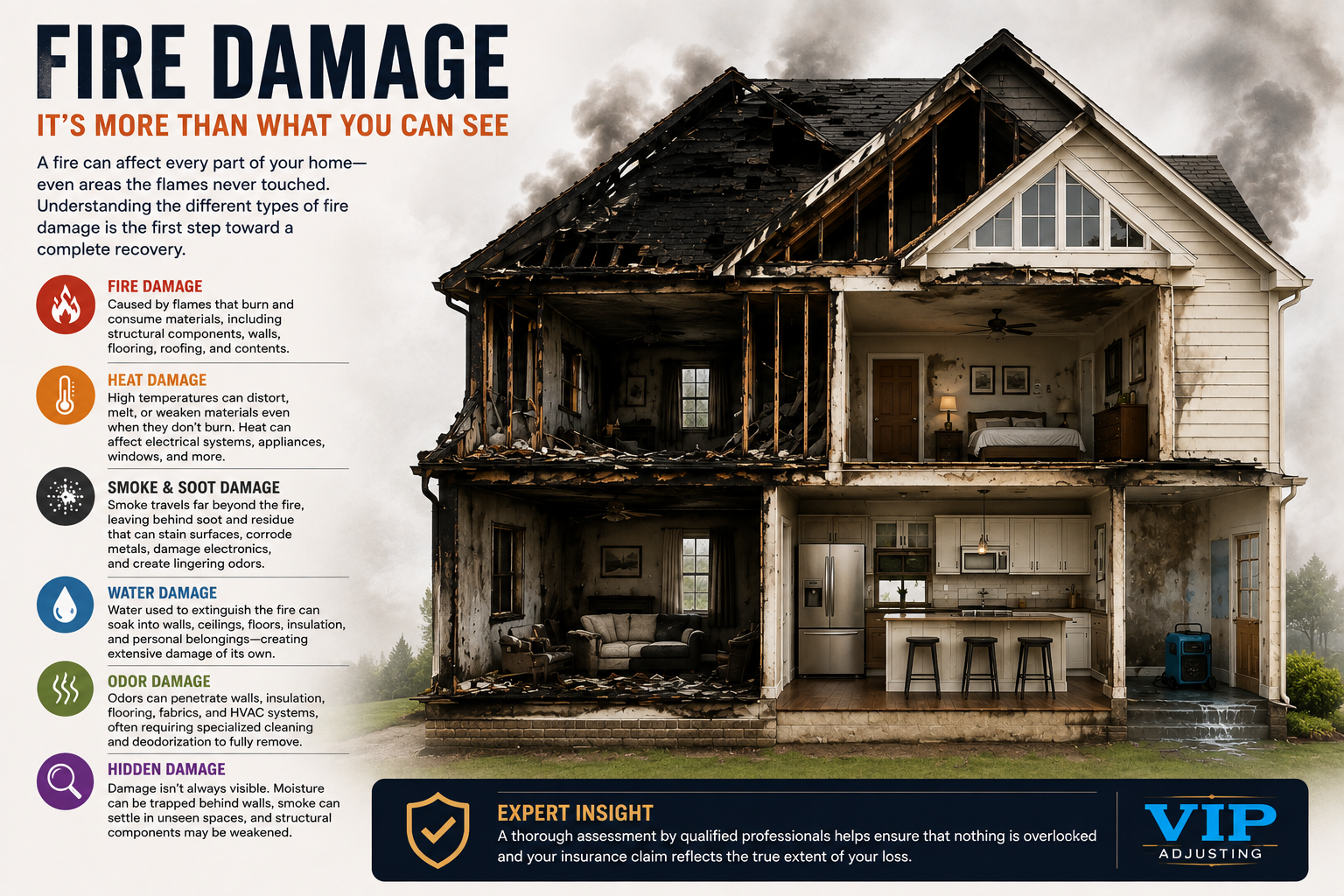
Fire Damage: What Every Property Owner Should Understand After a Fire
Fire damage is rarely limited to what actually burned. Heat, smoke, soot, firefighting water, hidden moisture and combustion residues can affect areas throughout a home—even rooms the flames never reached. This comprehensive guide explains what property owners should look for after a fire, how different types of damage are evaluated, and why understanding the full extent of the loss is an important first step in navigating a fire insurance claim.
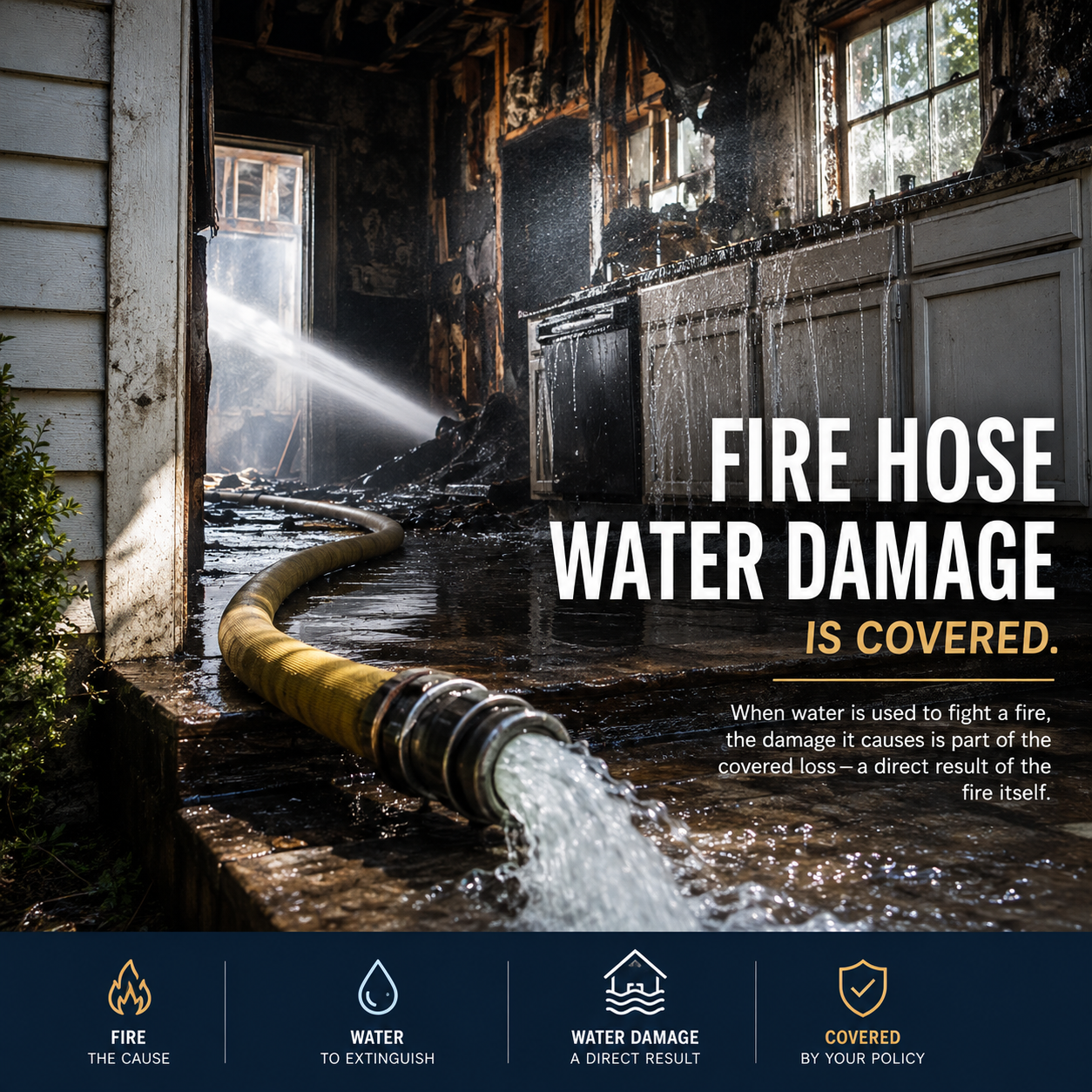
The Fire Didn’t Destroy My Home -The Water Did…Is it Covered?
Many homeowners are surprised to learn that the fire itself isn't always the greatest source of damage. Firefighters often use thousands of gallons of water to save a home, and that water can damage ceilings, walls, floors, furniture, and personal belongings. Learn why this damage is generally covered as part of the fire loss.

House Fire Insurance Claim: What to Do in the First 24 Hours
The first 24 hours after a house fire are some of the most important for both your family's safety and your insurance claim. Learn the essential steps homeowners should take to protect their property, preserve evidence, document damage, and begin the recovery process.
From Stove Fire to Full Property Claim: Understanding the True Cost of Smoke and Soot Damage
A kitchen fire might seem like a small incident—but the smoke, soot, and chemical damage can affect every room in your home. Learn why fire marshal reports, hygienist testing, and public adjusters are essential after even the smallest blaze.
